|
| France
and Europe (#1) |
The building of Europe is a fascinating
moment in History.
|
And also
:
|
|
|
|
 |
| Europe : a succession of political dreams . . . |
Europe is NOT one more free trade zone. This is an important side of it but you don't make people dream about custom duties. Free trade was a project to bring prosperity, and it did work as such but it was not a dream.
-
The original dream in the 1950s was about PEACE : no more wars! And this dream came true : today, who can fear a war between member states, after three Franco-German wars in 70 years, or a civil war in a state involving other states, like the Spanish war in the 1930s? Read about life in occupied France 1940-1944.
-
The second dream was about FREEDOM and DEMOCRACY. This is why the European Union accepted as members many countries shortly after they were liberated from a dictatorship : Spain, Portugal and Greece in the 1970s and ten Eastern former Communist countries in the 1990s. By becoming members of an association of democratic regimes, it was expected that they would evolve and become one of them. And this dream also came true : even if there are, here or there, unacceptable political movements, all of Europe is clearly a region of sustainable democracy.
-
The third dream is more difficult to reach, at least for the moment : it is to transform a group of countries, each with its own political power, into some sort of a federation with a kind of political POWER of its own. This is what the British voters refused when they voted for Brexit but for the remaining 27, this is the challenge for the next years. The Europe of the future will not be a federation like the USA (the "United States of Europe"). It will be an entity that is different and more complex, to be invented. Come back in 2050 or so!
All the surveys about Europe and the French show that for them, basically, Europe means : 1/ peace, 2/ the reconciliation with Germany and 3/ prosperity. |
| |
| Questions
about Europe... |
Here are some facts and (partial!)
answers to questions you might have on Europe : |
- What is the most important about Europe today?
|
See specific page on "issues and achievements" of Europe |
- How does France compare to other
European countries?
|
France
represents approximately 1/7 of the European population
(now 27 countries without UK). France is the least dense and the largest
country in Europe (but Texas is 25% larger and Alaska twice!).
It has the largest surface of forests. It is the first tourist
destination in the world (in Europe, before Italy and Spain).
Among European countries, in terms of economic power, the order
is Germany (GDP 2014 =2,904 b Euros) followed by UK (2,222),
then France (2,142) and Italy (1,616) ; the GNP of the smallest country, Malta, is 8 b. Total GNP of the EU is 13,921 b Euros. The 12 recently admitted countries are economically
and socially less advanced but, having an educated population,
they are growing fast. Their arrival is creating a significant
internal competition
within Europe. See geographical facts and figures about France. |
- Will Europe ever be built?
|
Do not look at Europe with
your American eyes ! You might consider that Europe should do
what you did two and a half centuries ago : form a federation
and become one country. Since it is obvious that it is a slow
and painful process, you might consider that Europeans are wrong
and hopeless (if you like to jump to a black & white conclusion!).
But it is difficult for several countries to unite when it is
not AGAINST someone (like in a liberation war) and the building
of Europe is not against an ennemy. It is a very complicated
process ! There are several Europes :
- an economic Europe with
no borders, no tariffs, an open market, one labor market, etc
: it is practically done and already 17 out of the 28 countries
of the E.U. use the same currency
- a cultural Europe and
the common feeling of belonging to the same culture : this is
very strongly felt among Europeans but the fact that they speak
24 official languages (plus many others) makes it very complicated
because no country wants to give up its culture and its traditions
- a political Europe is
even more difficult to build and each big country wants to maintain
its own political role while smaller countries do not want to
be dominated by them
Some countries, typically the
U.K. and, in the future, Switzerland want only an economic Europe.
Some countries want a political Europe if it makes it possible
for them to play a bigger role, in spite of their reduced importance
(typically France and maybe Germany). Most European countries
think that Turkey would be very welcome in an economic Europe
but very inadequate in a political Europe, because of the huge
cultural differences (remember : it is a Muslim country). Morocco,
Tunisia are like Turkey. Countries like Ukraine and Moldavia
are absolutely European from a cultural standpoint but not economically
and they would raise huge political problems if they joined.
Other countries are economically too selfish (Norway) to join
even political or cultural Europe, etc... And what about Russia
?
In brief : there is obviously room for an economic region of
40 countries. The cultural common feeling does not raise any
problem. The political power of Europe will not be created as
clearly as it was in America : it will probably appear progressively
and develop with time and/or from a smaller number of countries
(like the 6 founding countries). See "why
it is so difficult" and "reasons for hope" and read some specific political problems of some European countries.
By persistently pushing the Turkish
candidacy to Europe, American diplomacy played a very dangerous
role : Turkey is frustrated and European countries are embarrassed.
What if the European Union promised Mexicans to help them to
become the 51rst US state ?
The building of Europe is an excruciating process, however, there is now some Good News about Europe in spite of the major crisis created by the Brexit in 2016. |
- What is the major dividing
line in Europe?
|
The 28 countries are different
; they all feel European but there are two major dividing lines
- between Northern
Europe and Mediterranean Europe. France belongs more
to Mediterranean Europe in spite of some Northern aspects. This
comes from its geography and its history : the borders between
the Mediterranean and Germanic world, between Catholicism and
Protestantism, etc....
: France is torn between being the most advanced Southern country or being the least reasonable Northern country in Europe !
- between countries which see
Europe rather like a large free trade market (UK, Scandinavia
and Eastern Europe) and those which see Europe rather like the
birth of a federation (mostly the 6 founding countries :
Germany, France, Italy, Belgium, Netherlands and Luxembourg).
In terms of foreign policy, the first want to maintain close
relations with the USA when the latter think they can build a
federation, friendly with the USA but a world power in itself.
Being a little bit on each side, France is torn along these two dividing lines, which may explain what can look like inconsistencies of French policies :
- sometimes France wants to act (and talk) as the richest, most serious and advanced of Southern countries and she lectures Italy and Spain (who hate it!), or she defends them against the rich and sefilsh Northern countries (like in the Greek crisis in 2015)
- sometimes she wants to be the country the most open to social and environmental concerns of global countries, and she lectures UK and Germany (who hate it too!).
Inside Europe, as well as outside Europe, it is very difficult for France to see herself as a member of a group of countries, with no specific message for the entire world....
T.R.Reid has elaborated comparative
ratios between the 25 European countries regarding anti-Americanism,
Federalism and Globalization.
|
- How
many languages in Europe?
|
Until
2002 Europe had 12 official languages (in approximative order
of number of speakers: German, French, Italian, English, Spanish,
Dutch, Portuguese, Greek, Swedish, Finnish, Danish, Gaelic) not
to mention other sometimes largely spoken languages (such as
Catalan, Basque, Breton, Welsh, Scottish,...), or regional forms
of foreign languages (Flemish in Belgium, Alsatian and Corsican
in France,..). Luxemburgish is the only official language of a member state which is not a European official language. This number is now increased to 24 official
languages with the admission of twelve new members for which
400 additional interpreters were hired in 2002 and a few more
to accomodate Romanian and Bulgarian and Croatia (2014). The number of official language combinations for official documents or public debates (German-English, French-Finnish, etc.) is now (2014) as high as 552! One of the European Commissioners is in charge of multimingualism with the long-term objective that everybody in Europe should speak three languages (his/her mother tongue plus two foreign languages). More about French
language... |
- What are the European institutions?
|
European institutions include
: (see more about European
institutions)
- the "Commission" (in
Brussels, with 24 "Commissaires" and a President) ;
the executive power is held by the "Directions" (directorate)
: among the most powerful of them, the Directorate General for
Competition, in charge of the anti-trust regulation
- the European Parliament (which
sits alternatively in Brussels and in Strasbourg, the latter being its official location),
- the European Court of Justice
(in Luxembourg) and the European Court of Human Rights (in Strasbourg), which can overule any
national law or court decision
- the European Central Bank (in
Frankfurt).
- Adopting and implementing a
constitution for 28 countries is one of the main issues
of the coming years. A project was signed by the heads of state
in Roma (Oct.28, 2004) and had to be approved in each of the
25 countries by a vote of the parliament or by a referendum (like
in France). It was rejected by France and Netherlands and a new
project had to be elaborated (Traité de Lisbonne).
- Finally (2010), a less ambitious constitution created 2 positions which are expected (within a few years...) to strenghen the European institutions : a President (the first one being H.Van Rompuy, a Belgian) and a Minister of Foreign Affairs (C.Ashton, a Briton).
|
- How many countries are candidates
for admission to the European Union?
|
Several
countries are in the admission process to the European Community
: to be admitted they must satisfy strict admission criteria
(budget deficit, inflation rate, indebtedness, etc..) ; the last
waves included Poland, the Czech Rep., Hungary, Slovenia, Lithuania,
Lettonia, Estonia, Malta, Slovakia and Cyprus in 2004, Romania
and Bulgaria in 2007. They added 100 million to the existing
375. The candidates for next wave of admission are Croatia
(in 2013) and maybe, later, Turkey
and Serbia which would add 90 million habitants to the current population |
- Is the European Commision a "super-
bureaucracy"?
|
It is easy
to criticize the "Brussels administration" and consider
it is just a stupid bureaucracy. In fact, by reducing the innumerable
disparities between the country members, the European Commission
made it progressively possible to consider Europe as one market,
with the same standards (protection of the consumer : see "how
to read a label"). |
|
|
Since
1999, the Euro is the European currency. It is used in 17
countries out of 28 (among the members in 1999, UK, Denmark
and Sweden have not adopted it). Newly admitted countries will
join it progessively when they meet the European financial standards.
Last admitted : Slovenia, Malta, Cyprus (2008), Slovakia (2009).
Four small countries who are not full members of the European Union (Andorre, Monaco, San-Marino and the Vatican) can use the Euro and even mint coins. Read about small countries in Europe. The Euro first had a fixed exchange rate with 13 existing currencies
(one Euro is 6,55957 French Francs) and these previously existing
currencies (banknotes and coins) disappeared between January
1, 2002 and June 30, 2002 at the latest (for the French Franc
: February 17, 2002). See about coins
and bills. |
-
A comparative study (2002) illustrates the well-known
North/South split (civic sense, importance of being part
of a community, collective values, Protestants/Catholics, ...).
Here again, France is in an intermediary position : Index of
confidence in other people = 21 (European average : 31, Scandinavia
: >60), % members of an association = 40 (Europe : 46, Scandinavia
: >90), politization index = 40 (Europe : 45, Scandinavia
>60), % of members of a labor union = 9,1 (Europe
: 20 (estimated), Scandinavia : >80). See détailed
results.
- The European budget is small and it represents only around 1% of the GNP of the member states (see figures). In 2012, the biggest net contributors to the European budget are Germany, France, Italy and UK and the biggest net beneficiaries are Poland, Greece and Hungary (see detailed figures). France pays 18,1 b € and receives 13,2 b € of which 9,5 (agricultural Policy), 1,8 (regional Policy), 1,3 (R&D policy) and 0,5 (others).
- Some of the major issues for the member states are :
- for France : to keep its agricultural subsidies (within the Common Agricultural Policy)
- for Germany : not to be the one who grabs the check
- for UK : to keep its (undue) rebate and to avoid the construction of any European political power
- for Eastern countries : better manage the contribution they get from Europe
- etc...
-
Intercultural
management : with questionnaires
for more than 100,000 employees of IBM, all over the world, Geert
Hofstede (1991, 2002) has identified 5 dimensions to assess intercultural
management differences (see more
details and see the numbers
(quoted by R.Hill).
-
Religion : some countries are almost exclusively Catholic
(typically Poland or Ireland), others almost exclusively Protestant
(like Sweden), or largely split (like Germany). France (with
Portugal) is probably the the most secular country in Europe.
Read more on religion.
-
More to come
|
|
DID YOU KNOW
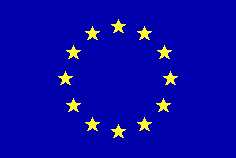
THAT.....? The European flag (see above) is blue with
12 stars (they do not correspond to the number of countries).
The European anthem is the final of the 9th symphony of
Beethoven ("...Alle Menschen werden Brüder , Wo dein
sanfter Flügel weilt." i.e. "Then we all shall
stand as brothers, where your gentle wings spread wide").
The European motto is "Unité dans la diversité"
(unity in diversity).
DID YOU KNOW
THAT. ? There are more than 28 states in the European Union !
Several micro (more
or less) sovereign states also belong to the E.U. (with a different status from major countries) : Vatican (0,17 sq.mi.,
pop. 1,000, Head of State : the Pope), Monaco (0,6 sq.mi., pop.
25,000, Head of State : Prince Albert II), San Marino (24 sq.mi.,
pop. 20,000, a seven-century-old republic), Andorre (180 sq.mi.,
pop. 20,000, a principality with two co-heads of State, the King
of France i.e. the President of France, and the Bishop of Urgel,
in Spain). On the other hand, some other territories do not belong
to the E.U., although they are geographically and historically
part of Europe : Jersey and the other Channel Islands (75 sq.mi.,
pop. 120,000, a medieval political system on each island, part
of U.K.),Gibraltar (2,3 sq.mi, pop. 30,000, a British possession),
Liechtenstein (62 sq.mi., pop. 25,000, Head of State Prince Hans-Adam
II), Isle of Man (220 sq.mi. pop. 60,000, administrated by a
Lieutnant-Governor). In addition to their European territoriy,
several countries have possessions outside Europe with a status
similar or identical to the rest of the country : French DOM
(Départements d'Outre-Mer) : Martinique, Guadeloupe, Guyane,
La Réunion, Saint Martin, Saint Barthélémy,
Saint Pierre & Miquelon and numerous TOM (Territoires d'Outre-mer)
(more about French
possessions)
; Dutch Carribean possesions ; Spain has two cities in Morocco
(Ceuta and Melilla) ; Greenland, a Danish possesion, is not included
in the European Union, as well as UK possession, etc....
|
| Some
(minor) controversies in Europe... |
|
A
short Bibliography |
|
It is a major historical challenge
to put together 27 countries or more and ask them to work on
reducing differences between them without hurting their national
pride, their history, their traditions, etc... too much. On some
major issues, the building of Europe has been incredibly successful
with a sense of consensus driving the national governments (like
creating the Euro). On other issues, it is still an on-going
battle (like the type of relations with the USA) ! Among the
(minor) controversies :
-
Cheese
: many French cheeses are made of "Lait Cru"
(raw milk, non pasteurized) and therefore, if not well processed,
may contain some very dangerous germs : Northern countries (who
like cheeese made of cardboard...) want to ban them, many people
in France would rather secede from the EU... France is not obeying
European regulations (but in October 2002, it was forbidden to
France to sell French feta cheese, feta being Greek...) . In
one such controversy, the war was lost : see the Chocolate
War ! See also the Wood-Shaving-W
- Bulls
: bullfighting is a national
tradition in Spain and it is also very popular in Southern France
; many countries (again, Northern) invoke cruelty against animals
to ban this form of art (this is the word the webmaster uses,
since he is a strong supporter of this form of ART)... Spain
and France are not obeying European regulations. Same situation
for rooster fights, very popular near the Belgian border (but
their artistic aspect seams --to me-- more questionable).
DID YOU KNOW
THAT... Bullfighting is clearly a Spanish tradition and
the best bulls and bullfighters come from Spain which dominates
this activity but, still, France is a strong "corrida country"
: many major ferias take place in France (Nîmes, Bayonne,
Arles,...) and several famous bullfighters, with Spanish names,
are actually French (Juan Bautista, for example)! Go see a corrida
when in the South of France (Provence around Nîmes, Sud-Ouest
around Mont-de-Marsan): maybe you'll love it ! (Picasso said
:"Bulls are angels with horns") By law, in France,
bullfights can take place only in cities which have an "unbroken
bullfighting tradition" (47 cities in France, generally
small). In Camargue (around Arles), there is another tradition of games with bulls, the "Course Camarguaise" : the aim is to grab a small rosette which is fixed on the forehead of a bull whose horns have been made less dangerous by a wooden ball at their end. Very spectacular and the bulls are not wounded and killed (but the players are often wounded!)..
- Hunting : Europe is regulating hunting and, in
the frame of the Environmental policy to protect endangered species,
some traditional forms of hunting are strongly constrained :
in two regions of France (Bay of Somme in the North and Gironde
around Bordeaux) the tradition is to shoot doves on their way
back from migration ; a political party to oppose this regulation gains up to
5% of the vote at any French election and again France is not
obeying European regulation. More about environmental
policy in France and read about the Presidential Hunting Parties. Read about the sad story of the last "French bear".
DID YOU KNOW
THAT. ..? Hunting regulation is among the most typical
examples of opposition between France and the European administration
: because of a huge domestic opposition to it, successive French
governments have refused to comply with European regulations
on hunting periods for migrating birds and France has been sentenced
to very big fines. A political party called " Chasse Pêche
Nature et Tradition " got up to 5% of the votes in national
and European elections. Among other examples of conflict between
Europe and France, one could mention the regulation on food (forbidding
cheese made with raw milk or calling chocolate products that
are not real chocolate) ; a similar example with Spain are the
attempts by northern countries to limit bullfights..
|
|
- Luigi BARZINI, The Europeans,
Penguin,1983
- Luigi BARZINI, The Italians,
Atheneum, 1964
- Olivier
CLODONG & Jose-Manuel LAMARQUE, Pourquoi les Français
sont les moins fréquentables de la planète
les Européens et nous, Eyrolles, 2006
- Richard HILL, We Europeans,
EP, Bruxelles, 1992
- Richard HILL, Sharks and
Custard - The Things That Make Europeans Laugh, EP, 2001
- Richard HILL, Euromanagers
and Martians, EP, 1994 (a must for Expats!)
- T.R. REID, The United States of Europe
- The New Superpower and the End of American Supremacy, Penguin,
2005 (a very stimulating book by a former Washington Post Bureau
Chief in London, illustrating that, through crisis and obstacles,
Europe is actually forming)
- Jeremy
RIFKIN, How Europe's Vision of the Future is Quietly Eclipsing
the American Dream, Penguin, 2004 (indeed a very arguable
book...)
- Roger WOODHOUSE, Tangled Destiny
- France, Europe and the Anglo-Saxons, 2006, Thumbnail Pub.
- More to come (see our Bibliography
page)
DID
YOU KNOW THAT... Launched in 1987, the European program ERASMUS enables students to
do part of their cursus in a foreign university (generally one
year). The target is to involve 5% of European students. Today,
mostly in France, UK, Germany and Spain, 200,000 to 300,000 students
are part of the program each year. It is now one of the key elements
of the building of a common European culture. Cédric Klapish
directed a wonderful film about it : "l'Auberge Espagnole" (2002). The Errasmus program is now extended to teachers and to young workers in apprenticeship. It is unanimously considered a huge success both for education and for the understanding of Europe by young people. |
| |
|
Europe and the rest of the world... |
With the rest of the world, controversies can be on major issues :
- Protectionism and free trade : protectionism goes both ways and, for many Europeans, the EU is being very naive with the US by opening the European market while the US remain strongly protectionist ! In 2013, the subjects of conflict are actually pretty similar on both sides and the number of European complaints to WTO is higher (32) than the number of American's (19). See a few examples.
- Enlarging the union to countries
- which have something definitily "European" but which are at the border of today's Europe and outside : typically Ukraine, Turkey or even Morocco and of course Russia
- which are clearly in Europe but economically and socially so different that their admission would creat major problems, at least for the moment : typically the Balkan countries (Bosnia, Serbia, Montenegro or Albania) and Moldavia
- which are in Europe but are not interested in joining the Union : Iceland and Norway
- More to come....
|
|
-
Europe represents roughly one
fifteenth of the population of the world, more than a quarter
of the wealth and one fifth of the international trade. See comparative figures.
-
For Americans, Europe may loook
like a very heterogeneous continent, Europeans countrieshave
a lot in common and, indeed, are closer to one another than they
are with the USA. See a fascinaging
chart to illustrate it.
-
See mutual
stereotypes between the 25 countries.
-
Click here for an anti-European
quote from the Washington Times !
-
France in Europe : more comparative figures...
-
Public
Aid for Development :
in spite of slight fluctuations (exchange rates, data year),
there is no doubt that European countries spend significantly
more in public aid than the USA : two or three times more (see
detailed figures).
-
Two examples of very different
answers between European and Anglo-Saxon countries(according
to a survey by SOFRES, 2001) : Has it improved in the past
50 years ? Food ?No (France 69%, Germany (54%) or Yes (UK
72%, USA 78%) Communication between people ? No (France
66%, Germany 52%) or Yes (UK 71%, USA 72%)
|
| To related pages : more facts on
Europe (#2), more facts
& figures, Europe after the Brexit (#5), issues and achievements (#6), etc... |
|
To table
of contents
To top of the
page
Back to home
page
|
Harriet Welty
Rochefort writes articles and books about France and the French.
Order her books :
- "Joie de Vivre", Secrets of Wining, Dining and Romancing like the French, St.Martin's Press, New York, 2012
- "French Toast, An American in Paris
Celebrates The Maddening Mysteries of the French", St.Martin's Press,
New York, 1999
- "French Fried, The Culinary Capers
of An American in Paris", St.Martin's Press, New York, 2001
More on Harriet's
books
(excerpts, upcoming events, testimonials, etc..)
|
| To
email
me |
If you like this site, please bookmark it or create
a link! |
|