|
| Education in France (#2) |
Education in France is definitely
different from education in the US. On this page :
|
And also :
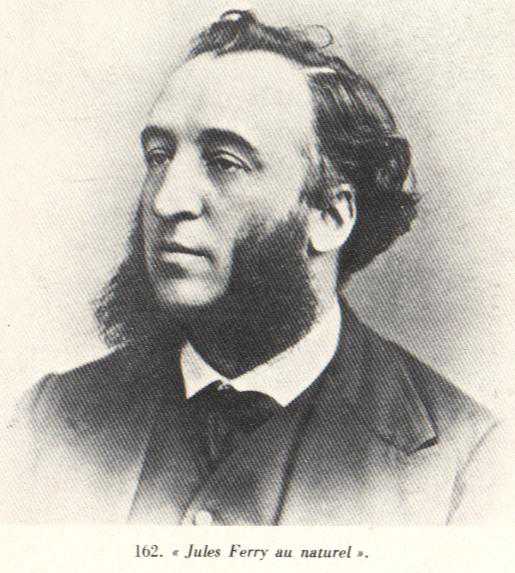
(right) A national hero Jules
Ferry, the symbol of free and secular education for all.
|
 |
|
|
|
|
|
|
| Raising children in France |
|
Studying in Paris |
-
French parenting is quite different from US parenting ! Children are less praised, they are taught very young to accept constraints (a regular schedule for meals, being quiet when with adults, etc). In day-care centers (state or city-owned and excellent), they enjoy 4-course meals from age one (with blue cheese..) and they are taught to be independent : they go on "classe verte" (a week in camp with the whole class) or summer camp from age six or seven. The French equivalent of Dr.Spock is Françoise Dolto (in the 1960s-1980s). American journalist Pamela Druckerman wrote an excellent book about the comparison of French-US parenting ("French children don't throw food").
-
Relations : in general, French
children are much more disciplined than American children
(they can stay very quiet all through a long family dinner...)
; they are much less prepared to being autonomous and to working
in teams. According to psychoanalyst Patrick Baudry, early childhood
is the key to understanding cultural differences between the
French and the Americans : the French are toilet-trained earlier
and eat baby-food later ! (read
more)
-
Family life: children live
with their parents much later, very often until they get
married (most college students live with their parents)
-
School : contacts between parents
and teachers are much less frequent than in the USA : parents
are not welcome in schools ! Teachers are very tough with children
: no positive reinforcement, differences in ability are much
less taken into account (eveybody must be treated equally), (See
Education). Harriet
sums it up in her book, " French
Toast " : when an American kid goes to school, his/her
mother says " Have fun " but a French mother says "
Work hard ". In a nutshell : French schools are much
harder on children. Says Nadeau
: the French don't regard childhood as an age of innocence, but
see it as an age of ignorance.
-
In the OECD Assessment Program, France rates only "average" (see detailed numbers) and, consistently with the whole French society, with more very good students and more very poor students.
-
Program (high school) : heavier than in the USA : see the number of hours per subject.
-
Benefits : France has a consistent
and efficient family policy (more financial
aid, many more kindergartens than in Germany, for instance,
etc...) and, as a consequence, France enjoys the highest birth
rate (1,9) in Europe after Ireland (2,0), when Germany, Italy
etc... are at 1,3.
-
More to come
|
|
This is one of the Frequently
Asked Questions. This site cannot answser questions on particular
cases but it tries to give some information to help potential
students.
-
To study in the American
system (high school and university) : see the list of American
institutions on the page American Community and contact an
association
of Americans abroad.
-
To study in the French system
(university) : as an example of one of the 13 universities in
Paris, see the site of the Sorbonne (in
English) and contact your own university : there are many study-abroad
programs. For specialized schools (cinema, journalism, etc...for
example) : contact them directly
-
For children of expats : contact the city where you live (Paris
or a suburban city) for French high school and primary school
and remember : an expensive (private) school is not necessarily
better than a (free) public school!
-
In Paris, there are only two public high schools offering the French-English accalaureat C, option internationale anglaise (OIB): Honoré de Balzac (17e) and Camille Sée (15e). For the Collège level (i.e. 6thto senior high), there are three public schools with an English International Section : Maurice Ravel (20e), Honoré de Balzac (17e) and Camille Sée (15e).
DID YOU KNOW
THAT....? French students do not live on campus : contrary
to the USA, many French students live with their parents (37%),
only 13% live on campus and the others rent (31%), share (6%)
or occupy for free (5%) an apartment (source : OVE/Le Figaro
24/11/2007). Only "Grandes Ecoles" have campus with
housing facilities, but all the students follow the same cursus.
DID YOU KNOW
THAT. ? In France 60% of high school kids take a " Cahier
de Vacances " (vacation book) with them on vacation
: they are best sellers every year (4 million sold) and contain
texts to read and exercices to do in order to keep studying during
summer and not get lost when back to school. Sounds like fun,
doesn't it ? |
| How
much does it cost ? An example... |
|
DID YOU KNOW
THAT....? In 2008-2009, there were 17,336 American students in France (and 7,421 French students in the USA). |
|
In France, at all levels,
education is free or almost ; the French are very attached to
it, as part of what they call their "modèle social".
In primary school sand high school,s textbooks are generally
free (paid for by local and/or regional authorities).
Universities are financed almost
entirely by State taxes. Tuitions are generally symbolic, research
contracts for the private sector are significant only for Grandes
Ecoles and donations are not frequent. As an example, tuition
fees in France for a student of Philosophy (4th year) at the
Sorbonne (annual cost) are (in 2005) :
- Library : 26,26 Euros
- Tuition : 102,29 Euros
- Student activities : 8,69 Euros
- University medical services
: 4,57 Euros
- Social
Security (i.e. Health program): 170,74 Euros
- Total : 312,55 Euros (approx.
$ 200 !)
At the prestigious
Institut d'Etudes Politiques de Paris, tuition, paid by
the student, is $1,160 per year when the cost per student is
$16,000 and the difference is, of course, covered by the State.
This tuition
is considered exceptionally high by French standards.
|
|
DID YOU KNOW
THAT....? In 1995 most French students went on strike and marched
in the streets because the goverment had raised the tuition
fee in Universities from something like $50 to something
like $100 a year.... Nevertheless, it is fact that, with universities
funded only by state subsidies, France devotes much less money
to higher education than the USA (1,1% of GNP vs 2,7%) which
is a major weakness for the future ; the "Grandes Ecoles"
get relatively much more money than the rest of the higher education
system.
|
| To related pages : more on education (#1),main issues of the French educational system (#3), French attitudes, intercultural differences, etc... |
|
To table
of contents
To top of the page
Back to home
page
|
Harriet Welty
Rochefort writes articles and books about France and the French.
Order her books :
- "Joie de Vivre", Secrets of Wining, Dining and Romancing like the French, St.Martin's Press, New York, 2012
- "French Toast, An American in Paris
Celebrates The Maddening Mysteries of the French", St.Martin's Press,
New York, 1999
- "French Fried, The Culinary Capers
of An American in Paris", St.Martin's Press, New York, 2001
More on Harriet's books (excerpts, upcoming
events, testimonials, etc..)
Together
or separately, Harriet and Philippe speak
about Intercultural Differences
: click here
for information.
|
| To
email
me |
If you like this site, please bookmark it or create
a link! |
|