|
| Intercultural
differences! (#1) |
|
And
also on other pages ::
|
|
|
|
 Harriet Welty Rochefort and webmaster
Philippe Rochefort doing what the French love to do most - earnestly
discussing life with a French friend over a cup of coffee on
the terrace of a bistro. Harriet Welty Rochefort and webmaster
Philippe Rochefort doing what the French love to do most - earnestly
discussing life with a French friend over a cup of coffee on
the terrace of a bistro. |
| A few stereotypes of how the French and
Americans often see each other.... |
|
Of course
these are broad generalizations and once Americans and French
really start talking to each other and explaining their societies
to each other, the stereotyped vision changes. There's more room
for "grey" in what is generally seen in black and white.
See the mutual
stereotypes of the 28 European countries |
The Americans see the French as
...
-
Lazy : people who do
not work and demonstrate in the streets (when they are not
on strike)
-
Cowards : they always surrender,
unreliable allies
-
Rude, anti-American and ungrateful, people who
don't speak English, distant and difficult to meet
-
Communists : people who live in a bureaucratic Socialist
system and who are totally dependent on the State
-
Dirty : people who do not use soap (recently,
I received a message : "why do French women use perfume
instead of taking a bath?")
-
Arrogant and conceited people, always giving lessons to the others
-
Not democratic : people who do not respect religious
freedom
-
See the remarkable list of Q&A
("112 questions about the
French") published by the US Army for the GIs in 1945
-
Read about the French "Godwin Point"
-
See more stereotypes about France and the French
|
Read about the image of France
in the US press
and the image
of the French for the other European countries, how the French see their own country and see the page on irksome France..
|
|
The French see the Americans as
...
-
Arrogant and sure they are always right and good,
-
Moralizing and overly religious
-
Insular : people who do not know other nations
and whose press never addresses international issues : read more about it, see
a few examples,
try our French Quiz ;
read a funny letter about it and measure your
insularity score !
-
Domineering
: people who do not take criticism (see examples...) : see why you can't criticize them !
-
Naive : de grands enfants (ie, people who are naive and have no, or a too
short, history)
-
Violent : people who have free access to guns and
who use them to shoot each other when things go wrong (read my column: "No more prayers, legislation please")
-
Materialistic : people who are arch-capitalists and only
think about money
-
Unequal : it is a fact that wealth inequality is much bigger in the US than in Europe and in France
-
Racist, and always lecturing other people about racism
|
More about America
as seen by the French |
| A psychoanalytical view.... |
|
Anti-French America.. |
|
Pascal Baudry
is a Frenchman who lived in California where he ran an organization,
WDHB,
that holds seminars on international management. His cyberbook
gives fascinating explanations of intercultural differences between
the French and the Americans :
-
For him, the key factor is in
infancy : the fact that Americans are weaned early and toilet
trained late when the French are weaned much later and toilet
trained much earlier (Pascal Baudry is a psychoanalyst, was
trained as an engineer and also got an MBA degree)
-
Later, education
develops major differences : schools help American kids become
independent and autonomous (their mother says : "have fun
") whereas French kids learn the principle of authority
(the mother says : "be good "). Read more details in
French Toast
-
According to Baudry, the major
cultural differences come from infancy and education.
|
|
| Contemptuous : about the evidence of the Iraqi
threat (as brilliantly demonstrated by Colin Powell!) "...so
convincing that only an imbecile, or maybe a Frenchman, could
conclude differently... " (NYT Feb.5, 2003). |
 |
He was
referring to the weapons of mass destruction (which are still to be
found and were just a deliberate lie by the president of the USA and his government to take the country into a stupid war). Read my comment about it and read a letter from a Harvard student. |
In a nutshell, the major intercultural differences are :
Americans
|
French
|
|
|
- optimist
and positive: value present and future ; good at action
|
- pessimist and negative: value
past ; good at analysis and criticism
|
- binary
: "it is true or false"
|
- contextual : "it depends"
|
|
|
|
|
|
|
- social identity is based
on the individual
|
- social identity is based on being a member of a
group
|
- law and contracts must
be respected ; everything is in the contract once it is signed
|
- try not to get caught ; signing
a contract is just the beginning of a relationship
|
- a contract is not linked
to the relationship
|
- the contract is strongly
associated with the relationship
|
- process oriented : everything
must be clear and documented ; reacts as planned
|
- like grey zones and nuances
; very creative ; very quick to react and sometimes more inventive
|
- try
to get a win-win deal
|
- if the other one wins,
it means that I'll lose
|
- DOING : you are judged
on what you do
|
- BEING
: you are judged on what you are
|
| An example : with the same word ("to do"
and "faire"), you get two very different
meanings : |
- positive
: a "doer" is someone who gets things done
|
- negative
: a "faiseur" is someone who is arrogant and obnoxious
|
|
|
|
|
Some revealing perceptions about France (from a Poll published in Figaro Magazine,
July 2004) :
-
Only one American out of five
ranks correctly France in terms of economic power (among the
5 or 6 major economic powers) : the American image does not correspond
to the economic reality and is a conventional traditional view
; 25% rank France beyond 10th ! See more
detail.
-
Many Americans ignore that many
industrial French companies are world leaders in their field
and keep associating France with wine and perfume. See more
about it.
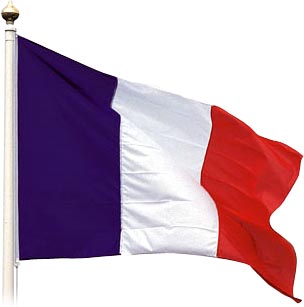
| As
seen by Americans, France is a very
different country from the one we know (read Guillemette
Faure about it) |
 |
-
More to come...
France and the French, as seen by the U.S. press : zero, except for clichés : read
more about it
Visit miquelon.org, the authoritative site on French-bashing,
with appalling quotes and links to racist and hate sites. See
a few examples
and more about French-bashing.
Hate the French ? See a list
of a few anti-French books...
DID YOU KNOW
THAT....? For Baudry as for many observers, there are fewer differences
between the French and the Japanese than with the French
and Americans ; in both France and Japan, the relation with the
authority principle, the individual and the group, the importance
of not being blunt, etc.. are very similar and both countries
have a long feudal history and refuse to give up their traditions.
Baudry links it to the fact that they have the same toilet-training
and weaning traditions. |
| Stereotypes : what other
countries think of France and the French |
|
And
how about French-bashing ? |
|
The image of the French for other countries (source : Francoscopie)
- the Japanese : sophisticated,
conservative, elegant, art
de vivre, noisy, brutal and dirty, cheerful and patient (see
a letter from Japan)
- the Americans : creative, not
open, cold and wary
(and anti-American)
- the Dutch : culture, respectful
of human rights, welcoming and open
- the Danes and the British :
disorganized and aggressive
- the Poles and the Swedes : inveterate
talkers, exuberant, impatient, distant and inhospitable
- the Swiss : unsafe, crime
- the Germans : they say "happy
as God in France"
- the Belgians : messy, inefficient,
self-satisfied
- the Brazilians : the French
do not like children
- and for all of the above : arrogant.
My God!!
- See another
similar list, read Frischer
and see a quote by a writer from Quebec
; Nadeau, who is Canadian, wrote "France is a mouse with
the skin of an elephant ; America is an elephant with the skin
of a mouse" !
And the French about themselves
:
- "The French constitute
the most brilliant and the most dangerous nation in Europe and
the best qualified in turn to become an object of admiration,
hatred, pity or terror but never indifference" (Alexis
de Tocqueville)
- "General de Gaulle is
right to believe he truly incarnates the French, he is wrong
to believe it is flattering" (Jean François Revel)
- Read about France as seen by
Charles de Gaulle in the
History section.
- More later...
It is funny to observe that many
of the stereotypes about the French (arrogant, frivolous, quarrelsome,
etc...) were the stereotypes about the Gauls by Roman or Greek
authors : read a few
quotes about it !
A few examples of major intercultural differences (to be developed)
- RAISING VOICE : a No-No in the USA, is not as bad in France where it does not necessarily express hostility. It may express passion, motivation, enthusiasm, strong opposition, etc, any strong feeling but not necessarily hostile. 99% of American wives of French husbands (the 100th is deaf) consider it the behavior they hate the most with their French husband. 99% of their husbands, sincerely, do not see what they are talking about (the 100th is an opera singer).
- More to come...
THE ANTI-FRENCH
QUOTE OF THE YEAR was provided by President George W.Bush himself
when he said "You know the trouble with the French, they
don't even have a word for "entrepreneur" (!!!)"
(Sunday Times, July 21, 2002). According to a specialized site, this is an urban legend but, as the Italians say, given the personality of George W.Bush, "si non è vero, è ben trovato".....
|
|
-
A very typical form of French-bashing
is what I would call "collateral
bashing" : you
take one very negative thing on one side, and something about
the French on the other. The reader or the viewer will make an
involuntary association and that's it. For instance, you put
in the same article "...Jack the Ripper killed nine women...." (and
further along) ".... Jacques Chirac declares that it is time to
subsidize cheese..." : the reader may conclude that Jack
the Ripper was subsidized by France. Read my column about it
and see a few documents to substantiate it.
|
About French-bashing, visit an
excellent site on French-bashing, read a "letter"
I received and read Paris
Diary (after a trip to the USA). French americanophiles are
very hurt by French-bashing : read a letter
about it.
|
 This is the cover page of the
New York Post (Feb 14, 2003) about "the Weasel Axis"
and Iraq evidence... (still to be found!) This is the cover page of the
New York Post (Feb 14, 2003) about "the Weasel Axis"
and Iraq evidence... (still to be found!) |
-
Racist ? : Knox (see above) says : "No
other national or ethnic group appears to get the same continually
negative treatment in print media reserved for France and the
French, with the possible exception of Arabs or Palestinians,
and even there, the treatment is not so much cultural as political,
linked to a specific context or event." He also says
"If one were to substitute, for example, "Mexican"
or "Japanese" or "Indian" for "French",
what would reader reaction be ?". Try to do it the next
time you read an article about the French in the NYT!
Read my editorial about American
racism...
-
The French are irritating...
In 2002 the British European
Commissioner Chris Patten, the German Minister of Foreign Affairs
Joshka Fischer and his French colleague Hubert Védrine
expressed the same (negative) opinion about the policy of the
US government. Only the latter was heavily criticized by the
US Press and the US government. One year later, Russia, Germany
and France opposed the (absurd) invasion of Iraq. Condoleeza
Rice, then adviser to president Georges W.Bush said : "Forgive
Russia, forget Germany, punish France". Says Colombani:
" ...the President (of the USA) is the headmaster and the
Europeans are the students. Whenever there's noise in the class,
without even turning around, the professor designates the French
student as the author of the disturbance ". Another example is the prohibition of the Islamic veil or of the burqa, which is considered (wrongly) by the US press as an attack on religious freedom (read my column about a ridiculous article in the NY Times) : the same week in April 2010, the French government decided to propose a law prohibiting the burqa from public places in France AND the Belgian parliament voted quasi-unanimously a very similar law. The US press did not mention the latter and made their headlines about the dangerous anti-religious policy of France !
-
More about French-bashing and read Jefferson about the benevolent French
people...
-
More to come
|
USEFUL TIPS.... The world famous comic
strip books "Asterix and Obelix" (more than 350
million sold) give an excellent idea of how the French see themselves
: the whole world is against them but they do not care ! In a
small village, totally surrounded, with the whole world against
them and particularly the powerful Romans (meaning the Americans...?),
they have fun eating, singing and drinking, and the Romans are
afraid of them. They survive thanks to the magic potion elaborated
by their druid Panoramix and which gives them formidable strength
and because they are more astute than the external world which
keeps bugging them when all they want is to enjoy their life
and eat wild boar in their lengthy banquets... Read these books
(in English) : they are a lot of fun and you might learn something
about the French ! See a cartoon of Asterix and Obelix and read what Roman
authors wrote about the Gauls : you could write it about the
French! Near Charles-de-Gaulle airport, the "Parc Asterix"
is a theme park devoted to these characters : it is smaller and
less spectacular than Euro Disney but not bad at all. It is interesting
to observe that this quintessentially French character was created
by René Goscinny (of Polish origin) and Albert Uderzo
(of Italian origin), illustrating the melting-pot of the French
society. Read more about French cartoons.
|
|
More on intercultural differences :Click here for :
|
| To related pages : more intercultural (#2), intercultural management (#3), French attitudes, are there too many stereotypes on this site ?, the French and sex, America and the world (#10), etc.. |
|
To table
of contents
To top of the
page
Back to home
page
|
All of Harriet’ s books focus on intercultural differences. Here’ s an excerpt from Joie de Vivre :
In France you won’ t find waiters strolling by with startling regularity to ask you if you’ re still " working " on your meal. Working ? For my husband and for any self-respecting French person, this is a contradiction in terms. How can you ‘ work ' on a meal, which by definition is a moment of pleasure ?
For more on inttercultural differences, order Harriet Welty Rochefort's books : Joie de Vivre. Secrets of Wining, Dining and Romancing like the French, St.Martin's, 2012, French Toast.An American in Paris Celebrates The Maddening Mysteries of the French, St.Martin's Press, 1999, French Fried. The Culinary Capers of an American in Paris, St.Martin's Press, 2001. More on Harriet's books (excerpts, upcoming events, testimonials, etc). |
Together or separately, Philippe
and Harriet speak about Intercultural
Differences : click here for information. |
| To
email
me |
This page is one of the 10 most visited pages of the site. If you like this site, please bookmark it or create a link. |
|