|
| France/USA
and their press (#6) |
|
 (credit) (credit) |
|
|
|
| France in the U.S. press |
|
The media in France :
misc. facts & figures |
|
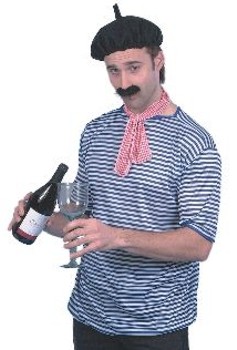
France and the French, as seen by the U.S. press : zero, except for clichés (fashion, food, strikes) or sensational
happenings. Conversely, whether you read about the USA as a superpower,
an economic giant, or a place where everyone's running amok with
guns, you READ about the U.S.A. every single day ! Criticizing
France and the French in the press is NOT, of course, French-bashing,
but when the same themes come back over and over, it becomes common
wisdom for French-bashers. Read more about French-bashing and
the US press. Read the results of a survey (published by the L.A. Times in 2005) about the adjectives associated with the French : wow !
The New York Times (NYT) gives
an excellent example of a systematically anti-French editorial
policy, but it is not the only one : The
International Herald Tribune
(IHT), now International New York Times (INYT), can be very patronizing as well, and The
Wall Street Journal pretty
manipulative too (see below).
Among the most shocking
examples :
-
a reporter
(Paul G.) asked me (WSJ, Feb.20, 2003) "...anecdotes
about incivility toward Americans in Paris...." ; for
anybody who ever set his/her foot in France, the question does
not make any sense ; I am sure it will make a "balanced"
article with 50% of the article about Americans ill-treated in
Paris, and 50% of other stories. What was the Editor looking
for ?
|
|
-
The French read more magazines
than comparable countries ; the most circulated are L'Express
or Le Point (like Time or Newsweek), Le
Nouvel Observateur (more Left-wing),VSD and many others
; contrary to the USA, they are sold much more by copy than by
subscription. Read Paris Diary about kiosques.
Every Wednesday, the entire political class reads, anxiously,Le Canard Enchainé(the Chained Duck), a very well-informed
political newspaper..
-
The French read less newspapers
than comparable countries : Ouest-France (regional, 800,000),
L'Equipe (daily, sports only, 500,000), Le Figaro
(center-Right, 400,000), Le Monde (center-Left, 300,000),
younger and more left-wing people read Libération,
business people read Les Echos or La Tribune ;
many commuters read one of the free newspapers (Metro
or 20 Minutes).
-
As in the USA, there are hundreds
of TV channels through cable or satellite, but the most
watched (free) channels are TF1 (private, around 30% of
the audience), Antenne 2 (state-owned, similar audience),
France 3 (regional, state-owned, number 1 outside Paris),
M6 (private), etc ; there is also Canal + (private,
by subscription, sports and movies) ; in France, the national
news on TV is at 8pm. See facts & figures about French TV channels.
- The French press belongs to the richest people in France ! After WW2, it had been established, particularly thank to the access to German secret sources, how dangerous it was to let very rich people or foreign governments own the press. Several legal provisions and State watchfulness made it more difficult but progressively, under the pressure of European legislation and of the market-oriented globalization, big fortunes and major companies became more and more interested in the Press (see figures)
- Daily newspapers : Le Figaro (Serge Dassault, 4th wealthiest person in France), Le Monde (Xavier Niel, 7th), Les Echos (Bernard Arnault, 1rst), Liberation (Patrick Drahi, 6th), Metro (Martin Bouygues, 20th) or Direct Matin (Vincent Bollore, 10th), weekly magazines Le Point (Francois Pinault, 3rd), Le Nouvel Observateur (Xavier Niel, again) etc. (Source : Canard Enchaine July 9, 2014).
- It is also true with TV channels, mostly privately owned : TF1, the first TV channel in France, and a dozen other TV channels (Martin Bouygues again), a few TV channels (Vincent Bollore, again) etc.
Certain subjects are recurrent in the French press
and represent some problems
of the French society which are not being addressed adequately
and/or on which the country is deeply divided; they include :
- Corsica : discussions with leaders who are pro or against
more autonomy, bombings by autonomists, etc
(in 2015, at the regional elections, Corsicans elected an Autonomist and Independentist majority)
- The privatization of major state-owned
utilities : EDF (Electricité de France), France Telecom,
GDF (Gaz de France), La Poste, etc
- Immigration : how to limit
it ? Often linked with serious problems in the poorest suburbs
: crime, unemployment, problems in schools, controversy about
the islamic veil, etc
- Social Security : its increasing
cost and how to control fraud and waste
- How can France join Europe and
still keep its traditions, its social system and remain different
?
- More about the most frequently
covered events in the
French press
- More to come
Some specific aspects of the French press (compared to the US press)
-
The reader or the TV-viewer is not shocked when the journalist expresses his/her own view (that is democracy...) instead of presenting only facts (that is considered boring...). Nobody seems to be impressed by the classical concepts of distinguishing reporting and commenting : they are often considered sheer hypocrisy....
-
Most French journalists lean to the Left Wing ! It is not prejudiced to observe that a large majority of French journalists and the editors of French TV (whether public or private) and of most newspapers lean very distinctly to the Left. Of course this is not the reason which explains why the general French mood is so negative and depressed but it could contribute to it. According to a poll published by the weekly magazine Marianne, only 6% of French journalists declare they feel closer to the Right Wing (this figure must be considered with caution : it is an old poll -2001- and its methodology is not clear). Just an example to illustrate it. On Sept.6, 2010, the day before huge demonstrations against a governmental (Right-Wing) project of reforming the retirement system, I watched the News on two state-owned channels. On France3 (regional), 10 man-in-the-street interviews : ALL of them against the reform, that's all. On France2 (national) : 4 man-in-the-street interviews : 3 against the reform, the fourth one who is very moderate ("maybe there is no other solution…") is (of course) a banker with suit and tie, then comes an interview of the leader of the major union and finally a report on how difficult the life of a worker impacted by the reform will be. If you come from Mars, you conclude that everybody in France, except maybe the President, is against this reform (but according to several polls, a majority of the French approve the reform, but it seems this is not an interesting fact for TV reporters....). If you want to form our own opinion, just watch TV or read the headlines.
-
French journalists are close, very close, to the power and in a way fascinated by top political leaders. By American standards, they are far too respectful with them and often hesitant to ask embarassing questions, which make many interviews and press conferences absolutely absurd and theatrical for foreign journalists, but French journalists like it. During his term, former president François Hollande (2012-2017) spent probably several hours a day with newspeople and directly inspired several books (which turned out not very flattering for him...).
|
-
Editorial policy :
-
French concepts and particularly the concept of laïcité are looked downupon when they are different from the American vision : this is typically the case of "laïcité" (secularism) : read about an incident when the the President of France had to call the YT to protest (November 2020) !
-
"His (Sarkozy's) party leader in Parliament wants to pass a law that bans women wearing burqas and niqabs from the street. The Talibans would be pleased. The rest of the world should declare its revulsion". (NYT Jan 26, 2010). Read my column "Talibans in New York".
-
The campaign about "anti-semitism
in France" in Spring 2002 did not correspond to real facts
in France at this time but it caused a lot of damage in the US
public opinion. Read a letter
to the International Herald Tribune, by an American living
in France.
The theme of the "French anti-Semitism" is recurrent in the US press and the articles are always very biased : read my opinion about it. (Winter 2018)
-
Just remember the campaign of
all US media in 2003-2004 about France denying the existence
of Weapons of Massive Destruction in Iraq..... ("the cheese-eating surrender monkeys", etc?) No apologies were
ever published.
More to come
- Choice
of words :
America in the French press
|
|
-
The French state helps the press financially. In France, the press is significantly subsidized. This is a good example of the French conception of Democracy. A free press is vital to democracy and when it becomes financially too difficult to survive it is too tempting for the press to become too dependent on business and big money and lose its independence. Therefore, it is the role of the King (i.e. the State) to protect it from temptation. One has to recall that in the 1920s-1930s the French press was highly corrupt and expressed the views that were expected by its sponsors (big business and the fascists states) and it left a major trauma in the public opinion and this is why nobody is against substantial financial help to the press. This includes : a reduced VAT rate (2.1% instead of 20%), a very important discount on postal fees (compensated by the State), the quasi-suppression of corporate tax, to name a few. The State has a word on everything and, for example, it considers that a large variety of magazines is good for democracy, therefore a new magazine has the right to be seen by the public : this is why the newsstands ("kiosques") in Paris MUST offer a complete choice, including magazines they'll never sell, and always look jammed with the weirdest magazines!
-
More to come ....
Do you know the "Chained Duck" ?
-
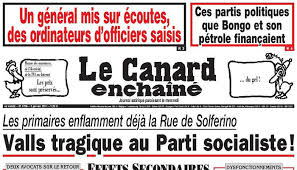
| The Canard Enchaine (literally the Chained Duck) is probably the most influential French newspaper. |
 |
It was founded in 1915 and its name is a pun about "canard" (slang for "newspaper") and "enchainé" (a reference to the censorship it suffered in WW1).
- It is a 8-page newspaper format, with many drawings, many briefs, no picture, no color. It is famous for its puns in the headlines and its devastating humor. It is not partisan but clearly somehow on the Left,with an old tradtion of anticlericalism. It is published every Wednesday and read with anxiety by all the French politicians and decision-makers.
- A classical comment everyone in contact with somebody powerful has already heard about something confidential is "I do not want to read that in the Canard Enchaine". Why ? The newspaper policy is to disclose facts, however embarrassing they can be for anybody (Left Wing, Right Wing, Big Business).
- The newspaper has zero advertising income, is very profitable and publishes its detailed accounts every year. Its circulation is over 400.000, sometimes more depending on the current events.Over the years, the newspaper has unearthed several major scoops, some of them having ruined a political career, others having taken a major corporation to court. Of course, politicians, business leaders, show-business stars often take the Canard Enchaine to court ; most of the time, they lose, since the facts are quasi-always accurate.
- The Canard prides itself on being totally independent from all powers and from the government and there is an old story about one of its journalists who was awarded the Legion of Honor. He was immediately fired. He complained to the publisher :"I did not do anything to get it" it and the answer was "You should not have deserved it".
- In 1973, the newspaper moved to a new address and shortly before they moved in, a cartoonist, member of the board saw a light in the future office : secret service people were installing microphones in the editorial conference room ; they pretended they were checking the plumbing but of course everybody laughted. It became the "plombier"s or "Plumbergate", in reference to the Watergate and it contributed to strengthen the image of the newspaper among French media even more.
- Among its most famous scoops :
- it destroyed the political careers of J.Chaban-Delmas (1974), V.Giscard d'Estaing (1979), J.Cahuzac (2012), F.Fillon (2017) and many others
- it unveiled past misbehaviors or even crimes of M.Papon (1981), P.Beregovoy (1993), J.Chirac (2002), etc...
- More to come ....
DID YOU KNOW THAT .... ? In the US, TV News programs are at 6:30 pm. In France, they are at 8 pm (i.e. 20 o'clock) and are called "Le Journal de 20 heures".
Visit miquelon.org, the authoritative site on French-bashing,
with appalling quotes and links to racist and hate sites. See
a few examples
and more about French-bashing.
Hate the French ? See a list
of a few anti-French books...
The French "Godwin Point"
-
You know the Godwin Point : when, in a discussion, someone raises the image of "nazi" or "holocaust" to counter your argument, this is the end of any reasonable discussion.
-
In the American political debate, France is often a sort of "Godwin Point". When a politician says "It's like France", it means "socialism", "addiction to the State", "despoilment of those who work to the benefit of the lazy", etc… and this is the end of the discussion....
-
See a few quotes to illustrate it to attack Obama
-
To be developed
|
| To related pages
: intercultural (#1), more intercultural (#2), intercultural
management (#3) and
the image of the USA (#4), irksome France (#5), typical French
values (#7) and favorite US
artists (#8), American
writers in Paris, America and the world (#10), etc... |
|
To table
of contents
To top
of the page
Back to home
page
|
For more on intercultural
differences, order Harriet Welty Rochefort's books :
- "Joie de Vivre", Secrets of Wining, Dining and Romancing like the French, St.Martin's Press, New York, 2012
- "French Toast, An American in Paris
Celebrates The Maddening Mysteries of the French", St.Martin's Press,
New York, 1999
- "French Fried, The Culinary Capers
of An American in Paris", St.Martin's Press, New York, 2001
More on Harriet's books (excerpts, upcoming
events, testimonials, etc..)
Together or separately, Philippe
and Harriet speak about Intercultural
Differences : click here
for information.
|
| To
email
me |
If you like
this site, please bookmark it or create a link! |
|